
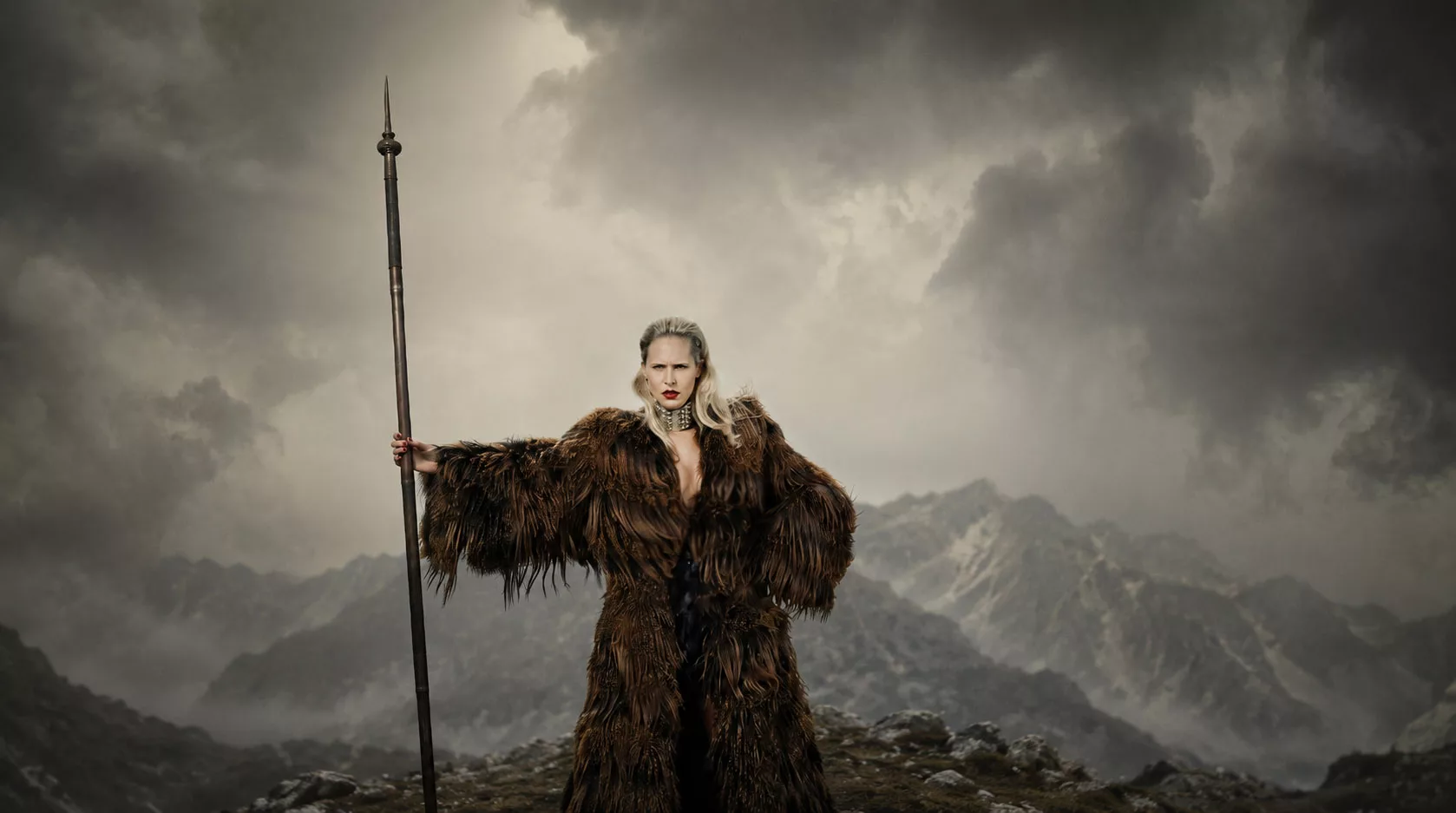
Most Photographers Learn to Shoot. Very Few Learn to Think.
FROM THE FIELD — James Nader
Field Notes · NVOS · The Business of Photography
I am going to tell you something that most photographers would never admit out loud.
Every single shoot I have ever done has made me feel scared.
Not just early on when everything was new and the stakes felt enormous because I did not know what I was doing yet. I mean every shoot. The editorial campaigns. The celebrity works. The fine art monochrome productions were on location in conditions that had no right to work. The jobs where the budget was real, the crew were waiting, the talent was on set, and I was holding the camera.
Every time. Scared.
And here is what I want you to understand before we go any further. That fear meant I was ready. It never meant I was in the wrong room. It meant I cared enough to feel the weight of what I was being trusted to deliver.
The question is never whether the nerves show up. They always show up. The question is what you do when they arrive.
Do you know what I did every single time?
I turned up. And I went through the process.
That is it. This is the key aspect that is often overlooked when one is starting out and questioning why the photographers one admires appear so composed on set while one feels as though they are barely managing to hold it together. They are not more confident than you. They have a process that runs whether they feel confident or not.
And that process, built shoot after shoot, brief after brief, across an entire career of real assignments, eventually found a name.
I call it NVOS. The Nader Visual Operating System is a software platform designed for visual programming and data visualisation.
This Field Note covers how it was built, what it means on a real shoot, and why it might be the one thing between where you are now and where you want to be.
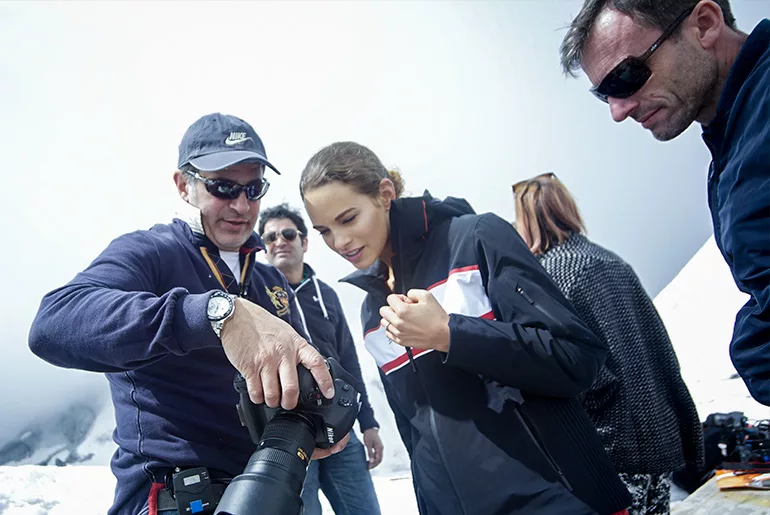
The Thing Nobody Taught You
Think about how you learned photography. Exposure. Composition. Light ratios. Editing in Lightroom. Compositional rules. You learned to shoot.
But did anyone ever teach you how to think?
Not what to do when everything is working. What to do when it is not. How to read a situation before it becomes a problem. How to see what is available rather than what was planned for. How to make a decision when everyone is watching and waiting and the pressure is as real as it gets.
That is the gap. And it is not a small one.
The photographers I have watched stay stuck, posting constantly, discounting their rates, wondering why the clients they want keep booking someone else, are almost never lacking in talent. They are lacking in structure. A way of thinking that holds when the conditions do not.
The photographers who build something real, who move from scraping together small jobs to working with real budgets and real clients and real creative authority, almost always have a version of this thinking, whether they named it or not.
You can learn it. That is the point. That is why this Field Note exists.
Thinking Is Not Optional. It Is the Job.
Here is something I want you to sit with for a moment.
Every human being is born with the capacity to think clearly under pressure. It is not a gift that some photographers have and others do not. It is not something that arrives with experience or confidence or a certain level of success. It is already in you.
What gets in the way is noise. The anxiety of the moment. The weight of other people’s expectations. The gap between what you planned and what is actually in front of you. The voice that says you are not ready, not experienced enough, not good enough to be in this room.
That noise is not the truth. It is just noise.
And thinking, real thinking, the kind that produces solutions when the lighting pack dies on a location shoot or the client changes the brief on the morning of the shoot, cuts straight through it. Not because you silence the noise but because you have something stronger running underneath it. A process. A framework. A way of approaching what is in front of you that does not depend on how you feel in that moment.
This is why I want to be direct with you about something.
The photographers who are building real careers right now, with real clients and real creative authority, are not simply more talented or more experienced or more connected than you. They are thinking more clearly. They have trained themselves, consciously or not, to notice what others miss, to visualise outcomes before they exist, to organise their thinking under pressure and to select deliberately rather than react blindly.
That is a learnable set of skills. Not a personality trait. Not something you either have or you do not.
The reason most photographers never develop it is not because they cannot. It is because nobody ever told them it was the job. They were taught to shoot. They were never taught to think.
That changes here.
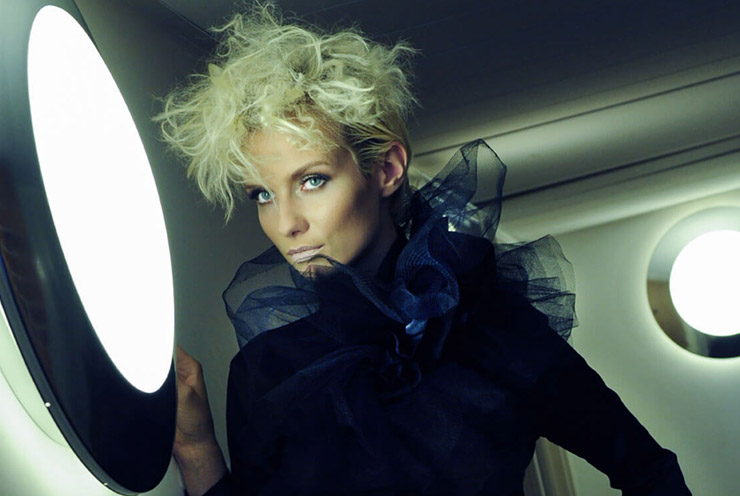
Iceland: When Everything Stopped
Picture this.
You are on a glacial debris field in Iceland. Completely exposed to the elements. The weather is moving between hail, sleet and snow and it does not care about your shot list or your schedule. On set is Nena, whose voice you almost certainly know even if you do not immediately place the name, the singer behind 99 Red Balloons, one of the most recognisable songs of the 1980s. Her daughter Larissa is there too. Talent of that presence means every hour of daylight carries real weight and every delay has consequences.
The Profoto lighting system is built and ready. The first test fires.
And then the pack dies.
Just like that. Nothing. Everything you built the shoot around, gone.
Now here is the moment I want you to really feel. Because you will face your own version of this. Maybe you already have.
The crew did not look at the broken pack. They looked at me.
Not with panic. Not with accusation. Just that quiet, expectant look that says, right then, what are we doing?
And in that moment I had a choice. Let the anxiety take over, start explaining, start apologising, let the mood on set collapse along with the lighting system. Or think.
I noticed what was still available. The ambient light on the glacier, extraordinary in its own way if I could work with it rather than against it. The time remaining. The mood of Nena and Larissa. What was actually in the kit bag that I had not yet considered.
“I visualised the solution before I reached for it. A Nikon SB900 speedlight is buried in the case. Not a Profoto pack. Not what was planned. But something that could work if I understood exactly what I was doing with it technically rather than simply hoping for the best.”
Then came the thinking that actually mattered. The relationship between flash and ambient light is important. On a location shoot like this, with the glacier as the backdrop and the atmosphere of the landscape being essential to the image, I could not simply blast the speedlight and hope. I had to balance.
I slowed the shutter to roughly a third of a second. That allowed more ambient light to register, kept the glacial atmosphere present in the frame rather than losing the background to a dead black void. I raised the ISO on the Fujifilm GFX, higher than I would normally push it, because here is something that photographers often misunderstand about exposure. Raising the ISO does not simply lift the whole frame. It effectively makes the flash appear stronger relative to the subject, provided you manage the ambient correctly. I opened the lens to 24mm and worked closer, keeping the composition wide enough to hold the landscape while placing Nena within it rather than against it.
Every one of those decisions came from understanding exposure at a level that goes beyond the exposure triangle you learnt when you started out. It came from years of noticing, on shoot after shoot, how light actually behaves when you stop guessing and start calculating it.
The mood on set shifted the moment I moved with purpose. That is the other thing nobody tells you. Momentum is everything on location. Waiting kills confidence, yours and everyone else’s. Action restores it. Even the act of reaching into the kit bag with intention, of talking through what you are doing calmly while you do it, changes the atmosphere on set.
Nena watched. Larissa watched. The crew watched.
The shoot did not just survive. It delivered.
Not because I was fearless. Because I had a process.
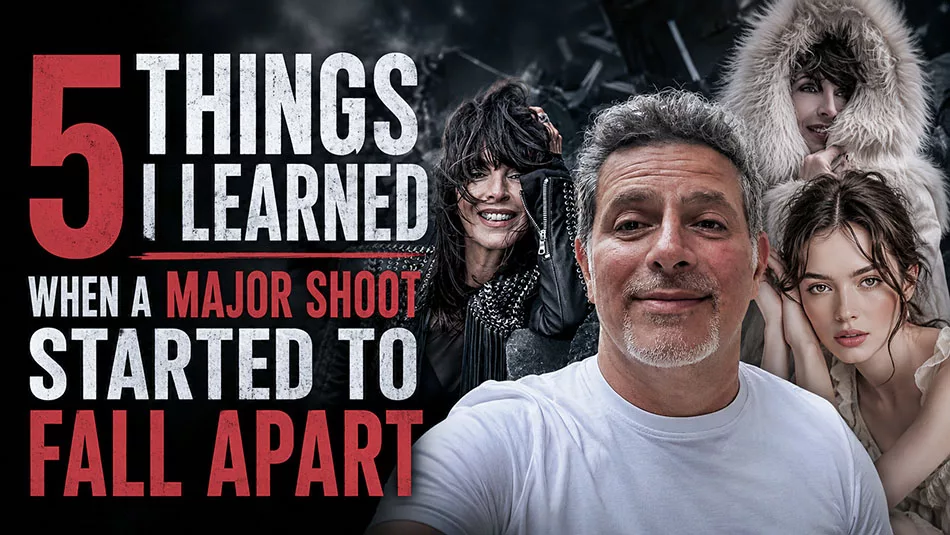
Lord Bath and Longleat: It Is Who, Not Always What
There was a commission to work at Longleat in Wiltshire. A project connected to Lord Bath, Alexander Thynn, one of the most singular, most written-about and most recognisable figures in British life. A man who had turned Longleat into something entirely his own. The murals, the wifelets, the safari park, the kaftans, and the decades of fascination all contribute to the overall experience. Lord Bath was not simply an aristocrat with a grand house. He was a character that Britain had watched for decades and never quite worked out.
The access came through a third party who believed I was already operating at a certain level. The honest truth is that I had not quite arrived there yet.
Can you feel that? That specific anxiety comes from being trusted with something you are not entirely sure you are ready for.
That is the moment that defines careers. Not the shoots in which everything aligns perfectly and you know precisely what you are doing. The shoots are where you go beyond your own certainty and have to think your way through it.
I noticed what the environment demanded. The weight of Longleat, the history of the place, the trust Lord Bath was extending simply by allowing access. I visualised what the work needed to be before I set up a single light or made a single compositional decision. I organised myself entirely around what the project required rather than what I was comfortable with.
And I selected, in every frame, every decision, and every interaction with Lord Bath himself, as though I had always belonged in that room.
Because that is what the work demanded. And that is what I delivered.
The lesson I carried from Longleat has informed every significant booking since. It is not always about what you know. It is about who you are perceived to be and whether your thinking, your process and your work can justify that perception once you are in the room.
Positioning matters. Mentorship matters. The way you present yourself and your work before a client ever meets you in person determines the level of access you receive. And once you are through the door, it is your thinking, your direction, and your ability to organise a shoot around what is actually there rather than what you hoped for that determines whether you are ever invited back.
What the Commercial Level Taught Me
Superdrug. Virgin. Boots. Avon. Lambertz, Campaigns with real budgets, real art directors and real expectations.
At that level the brief is fixed, but everything around it is variable. The light changes. The talent has a difficult day. The location turns on you. The client is on set, watching every decision you make and consciously measuring whether they spent their budget wisely.
What I noticed across those productions was consistent. The shoots that worked were not always the ones with the best conditions or the smoothest logistics. They were the ones where I was thinking most clearly. Where I was noticing what was actually available rather than managing what had gone wrong. Where the visualisation I had done before arriving on set gave me enough of a framework to adapt in real time rather than rebuild from scratch.
The Lightroom presets I developed during those years, the tonal foundations I used to shape editorial campaigns, advertising work and fine art monochrome portraits, came directly from that way of seeing. They are available at jamesnadereducation.com not because I packaged something up and sold it, but because they represent something real. A way of seeing built on actual production work, on real editorial briefs and real commercial clients, not assembled from tutorials or trend chasing.
The difference shows in the result. And your clients will feel it even if they cannot name it.

What Every Shoot Was Actually Teaching Me
Looking back across an entire career built on real assignments, from the earliest portrait sessions and editorial work to the glacial debris field in Iceland, from the first commercial job to Lord Bath at Longleat, the pattern is unmistakeable.
Every shoot was teaching me the same four things. I simply had to look at them clearly enough to see it.
Notice. Not looking. Seeing. The quality of ambient light before you set up. The tension in a subject before you begin direction. The composition that is available if you move two steps to the left. The client’s mood in the first ten minutes on set. What is actually there against what was planned for. Notice is the first discipline of NVOS because without it nothing else functions. You cannot visualise what you have not noticed. You cannot organise what you have not seen.
Visualise. The image before the shutter fires. The edit before Lightroom is open. The solution before the problem is fully formed. Visualisation is the bridge between what is in front of you and what you can make from it. It is what separates a photographer who responds to the shoot from one who leads it.
Organise. Creative thinking without structure scatters. On a location shoot, on a commercial production, in a portrait session with a client who is nervous and unsure and looking to you for direction, the photographer who is organised in their thinking creates calm around them. Organisation in the NVOS framework is not filing systems or workflow tools. It is the mental architecture that allows what you have noticed and visualised to become an actual decision, an actual frame, an actual body of work with a consistent and recognisable vision.
Select. Every photographer makes choices. The difference is the quality and the deliberateness of those choices. Your portfolio. Your clients. Your pricing. Your positioning. Your presets. Your direction on set. Reactive selection produces a floor. Deliberate selection builds a ceiling. Photographers who select deliberately in everything they do build careers that look inevitable from the outside and are anything but from the inside.
These four disciplines, Notice, Visualise, Organise and Select, form a complete loop. A way of approaching every shoot, every edit, every client conversation and every business decision with clarity rather than anxiety.
That loop is NVOS. The Nader Visual Operating System. And it works at every level of photography, from the portrait session in a small studio to the editorial campaign on a glacier in Iceland, because the thinking it develops scales with whatever the work demands.
The Quick Take
The nerves do not go away. The process is what runs when confidence does not.
The gap between stuck and successful is almost never talent. It is thinking.
Every shoot teaches you something. Most photographers are too busy reacting to notice what.
Seeing is not the same as looking. One is passive. One is a discipline.
Visualisation is what separates a photographer who responds to a shoot from one who leads it.
Reputation and positioning open doors. Thinking determines what happens once you are inside.
The system that works at your first portrait session also works on a glacier with international talent on set. Scale changes. Principles do not.
Direction on set comes from clarity of thinking, not volume of confidence.
Mentorship accelerates everything. Finding someone who has already done what you are trying to do changes the timeline completely.
Monochrome is not a filter. It is a decision about what you want an image to communicate.
Do These 7 Things and Build Towards Your First Six Figure Photography Business
These are not shortcuts. They are the actual sequence, drawn from a career built on real shoots, real clients and real consequences. Start here. Stay here. Build from here.
1. Stop waiting for confidence. Start the building process. Confidence is not a prerequisite for a serious photography career. Process is. Turn up. Go through the system. The confidence follows the work, not the other way around. Every significant shoot in this Field Note began with nerves and ended with delivery. That is not coincidence. That is process running underneath the anxiety.
2. Train your eye before you raise the camera. Notice is the first discipline of NVOS because without it nothing else functions. Before every shoot, commercial, portrait, wedding or editorial, spend time seeing the space, the light and the subject before a single frame is made. Not glancing. Seeing. Study the ambient. Read the composition before you set up. Understand what is actually available. That habit, built consistently across every shoot, is what turns a technically capable photographer into one whose work has authority.
3. Pre visualise every outcome. Know what you are trying to make before you make it. Not approximately. Specifically. The edit exists in the intention before it exists in Lightroom. The image exists in the mind before it exists in the camera. Photographers who pre visualise consistently produce work that feels considered rather than captured. And considered work commands better clients, better fees and better creative authority.
4. Build structure around your creative thinking. Scattered creativity does not build a photography business. Organised creativity compounds. Know your positioning, your pricing and your process, not from anxiety but from a structure that holds when the pressure is real and the client is watching. The Visual System Matrix at jamesnadereducation.com exists entirely for this. Twenty two frameworks built from real professional practice, not assembled from business books.
5. Select deliberately in everything. Your portfolio. Your clients. Your pricing. Your direction on set. Your presets. Your mentorship choices. Reactive selection produces a floor. Deliberate selection builds a ceiling. The photographers who stay stuck are almost always selecting by default rather than by design. One of those defaults is staying visible on platforms that reward speed and volume over depth and authority. You know which ones.
6. Understand that it is who, not always what. Positioning and perceived authority open doors that talent alone cannot. Build the authority first. Present yourself at the level you are moving towards, not only the level you are currently at. Then make sure your thinking, your direction and your work justify that positioning once you are in the room. Lord Bath did not know what I had not yet done. He knew what he had been told about me. I made sure the work matched it the moment I arrived.
7. Apply one system consistently across everything. Not a different approach for portrait work and another for commercial. Not one mindset for the shoots you feel ready for and a different anxiety for the ones you do not. One system, applied at every level, scaled to whatever the shoot demands. That system, that consistent way of noticing, visualising, organising and selecting, is what compounds over time into a photography career worth having. NVOS is that system. It did not begin as a framework. It began as a way of surviving under pressure and delivering regardless of how I felt. The framework came later, when I looked back and saw the pattern clearly enough to name it and teach it.
The Nervousness Truth
I said it at the start and I want to return to it before we finish because it is the most important thing in this entire Field Note.
The nerves do not go away.
They were there before Iceland. They were there before Longleat. They were there before every Superdrug campaign, before every editorial shoot, before every fine art monochrome production across an entire career built at the highest level of this industry.
What every shoot was trying to teach me, what most photographers miss because they are too busy managing the anxiety to notice the lesson, is this.
You do not need to feel ready. You need a process that runs whether you feel ready or not.
That is the whole thing. Right there.
NVOS is that process. Notice, Visualise, Organise and Select. Not a mindset exercise. Not a motivational framework borrowed from another industry. A creative operating system built across real shoots, real clients and real consequences. One that works at every level of photography because the thinking it develops scales with whatever the work demands of you.
The photographers who build serious careers all have a version of this, whether they named it or not. The ones who stay stuck are operating from instinct and anxiety alone, with nothing underneath when the pressure becomes real and the crew starts looking at them instead of the broken pack.
The difference is learnable. That is the point. That has always been the point.
What NVOS Is and Where It Lives
You can find a full introduction to the NVOS framework, Notice, Visualise, Organise and Select, in a free guide at jamesnadereducation.com.
The complete operational system is the Visual System Matrix. Twenty two frameworks built from everything introduced in this Field Note and everything that could not fit into it. Applied across creative identity, pricing, positioning, visualisation, direction, composition, decision making under pressure and the practical tools that keep the system working when a practice gets complicated and the stakes are real.
The Lightroom presets built across a career of real commercial and editorial production are there too. Not assembled from tutorials. From actual shoots, actual clients and actual creative decisions made under real pressure. The monochrome tonal foundations that shaped campaigns, editorial work and fine art portrait work across decades of professional practice. The starting point is not a gimmick. It is a way of seeing made transferable.
And if you want to go further, mentorship is there too. Direct access. Real conversation. The kind of guidance that changes the timeline of a photography career rather than simply adding to the noise around it.
Everything described in this post has a home. It is at jamesnadereducation.com. The rest is up to you.
Most photographers will read this and move on. A few will not. You already know which one you are.
James Nader is a fashion and advertising photographer, creative director and educator based in the United Kingdom. The NVOS system, the Visual System Matrix, Lightroom presets and mentorship are all at jamesnadereducation.com
how to build a six-figure photography business, NVOS photography system, James Nader photographer, photography business mindset, how to think like a professional photographer, Visual System Matrix James Nader, photography under pressure, commercial photography education, how to get better photography clients, photography career development, Nader Visual Operating System, photography business structure, how professional photographers think on set, Iceland photography shoot, Lord Bath Longleat photography, Nena 99 Red Balloons photography, jamesnadereducation.com, photography presets from real shoots, how to price photography with confidence, Notice Visualise Organise Select photography, exposure, visualisation, composition, Lightroom, Profoto, location, editorial, monochrome, ambient, direction, presets, positioning, mindset, mentorship, Fujifilm