
Should You Use a Viewfinder or an LCD for Composition and Focus?
When composing a shot photographers primarily use one of two tools: the viewfinder or the LCD screen. Your camera offers a main LCD screen that occupies most of the rear, and most models also feature a smaller, more ‘hidden’ screen known as the viewfinder.
While both are essential tools, many photographers will tell you that they gravitate towards one over the other, particularly when considering shot composition and focus. By understanding the strengths and weaknesses of each, you can make a more informed decision, improve your photography and help bolster your portfolio. This understanding can also help to influence your future camera purchases.
What Does a Viewfinder Do?
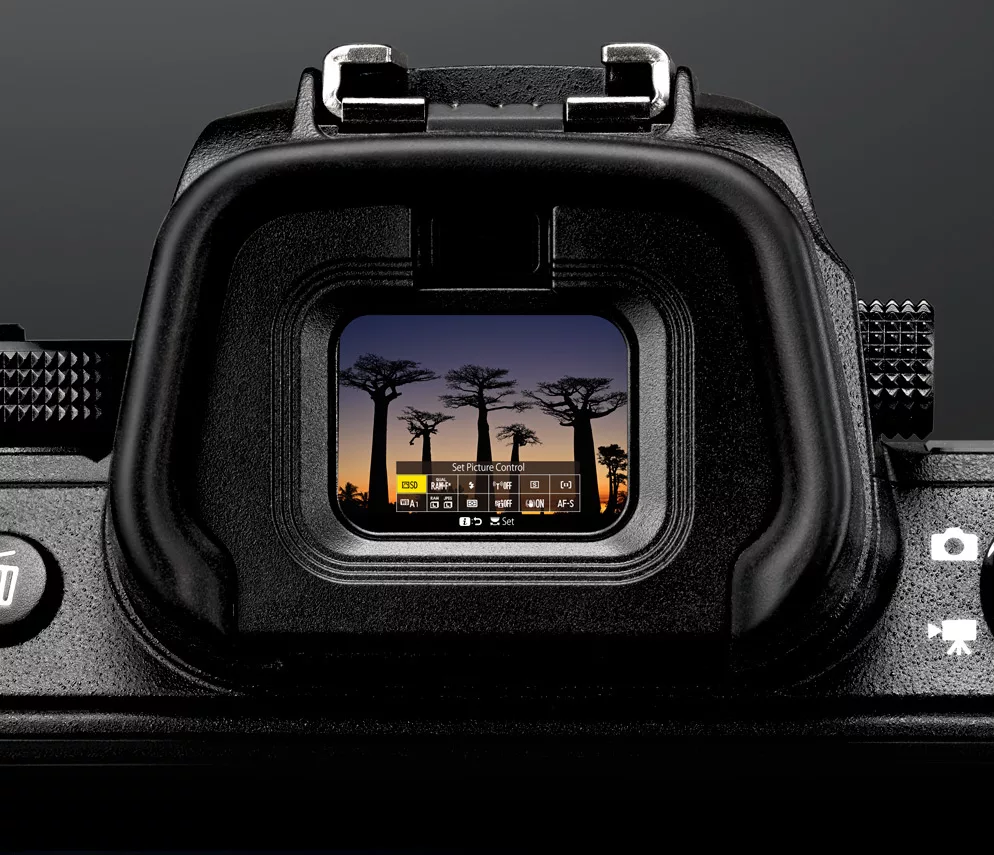
A camera viewfinder is the little window (usually at the top) of a digital camera that you look through to see the scene you’re going to photograph. Depending on your chosen camera, your viewfinder will be categorized in one of two possible ways.
Optical Viewfinders (OVFs)
These are traditional features found on early film cameras and many DSLRs. They provide an unfiltered and undistorted view of the scenery in front of you. OVFs don’t require battery power and thus work even when the camera is turned off. Similarly, they don’t struggle in low light and deliver accurate color representation since it’s no different from looking through a window. That said, they do have a few considerations; OVFs don’t show you the image when you take a photo due to the mirror in the camera flipping up when the shutter is pressed, thus blocking it. It’s also important to note that while OVFs reflect what you see with your own eyes, they don’t represent what camera sensors see.
Electronic Viewfinders (EVFs)
Commonly found in mirrorless cameras, these function as tiny, high-resolution screens that you hold up to your eye like an OVF. However, EVFs show exactly what your sensor will capture with real-time exposure bar adjustments, customizable overlays like your chosen exposure triangle settings, and focus peaking options. Essentially, EVFs are preferred by many photographers because they show exactly what the scene will look like when photographed. Having said that, they require considerable battery life and power, and don’t always work well in low light.
The Purpose of a Camera LCD Screen
The usually sizable LCD screen, on the rear of a digital camera, uses light-emitting crystals to display images. These crystals can show various light colors and intensities, which is why you’ll see some cameras offering ‘true LCD Colours Many contemporary digital cameras, both DSLR and mirrorless, often have tilting and rotating screens which make them ideal for taking pictures at tricky angles.
Some photographers, such as those with visual impairments or who wear glasses, prefer to use the LCD screen for visual cues as they’re more comfortable. The screens offer immediate playback and the composition of shots can be quickly adjusted without compromising on your shooting position.
A Comparison: Viewfinder vs LCD Screen
When the pros and cons are outlined in this way, it’s clear that the choice between a viewfinder and an LCD screen needs careful consideration, with each option providing distinct advantages suited to different shooting styles and situations. Understanding these differences remains important when considering your next camera.
Optical Viewfinders (OVFs)
| Pros | Cons |
| Zero battery consumption | Shows a limited amount of final image |
| Natural three-point stabilization system | Can’t preview depth of field or exposure effects in real-time |
| Weather resistant | No focus peaking or magnification |
| No glare issues in sunlight | View blocked during exposure on DSLRs |
| Immersive composition | Can be uncomfortable for users with glasses |
| Encourages deliberate, slower shooting | Shows maximum aperture view, not actual shooting aperture |
| Unfiltered, true color representation | Can be difficult to see fine details in low light |
Electronic Viewfinders (EVFs)
| Pros | Cons |
| Shows exactly what the camera sensor captures | Consumes more power than OVFs |
| Same three-point stability system as OVFs | Composition may appear grainy in low light |
| Shows exposure, white balance, depth of field | Often slightly brighter than final image |
| Focus peaking and magnification available | May have slight lag on occasion |
| Also weather-resistant | Also challenging for some eyewear users |
| Histograms, grids, and shooting info also available | Fails if viewfinder malfunctions |
| Immersive composition features | May not be 100% true to final image colors |
LCD Screens
| Pros | Cons |
| Shows complete image frame with no cropping | High battery consumption |
| Flexible positioning | Instability and shaking affects photo quality |
| Superbly detailed in low light | Glare makes viewing difficult in direct sunlight |
| Glasses friendly | Weather vulnerable |
| Immediate playback and instant review | Encourages rapid-fire shots rather than careful ones |
| Focus precision, peaking and magnification available | Users can be prone to peripheral distractions |
| Reduces strain for photographers with mobility issues | Often considered less immersive |
| Shows exposure, depth of field, and other customizable settings | May miss moments due to arm positioning |
Putting It All Together
It’s abundantly clear that viewfinders and LCD screens have pivotal purposes in modern photography, from monochrome street scenes to intricate portraits in corporate settings. Understanding the strengths and limitations of each feature will put you on the best footing for establishing which is the right one for your photographic situation.
Consider viewfinders if you’re:
- Taking photos outdoors in a range of weather conditions
- After maximum stability and battery preservation
Consider LCD screens for:
- Creative, low- or high-angle shots
- Studio and controlled photography sessions
- Any physical limitations that make viewfinders difficult to use
- Instant feedback
In my experience, viewfinders can be both positive and negative. For instance, I have worked with cameras offering exceptional optical viewfinders that are true-to scale and accurate, giving faultless results. On the other hand, other camera models have given me nothing but viewfinder frustration. The simple truth lies in both your choice of make and model, as well as your own personal preference.
This knowledge is especially crucial when you’re ready to make your next camera purchase, particularly in the used market. The ability to confidently assess features on a used camera can unlock access to high-quality, professional-level gear at a more accessible price point. While local platforms like Facebook Marketplace are tempting, the best assurance comes from reputable used camera retailers who provide essential details like a verified shutter count, a detailed grading system, and a standard warranty. It’s this kind of transparency that provides the certainty you need for a good purchase.
Ultimately, just like the art of photography itself, the key lies not in finding the ‘correct method’ but in mastering the techniques to expand your creative possibilities.